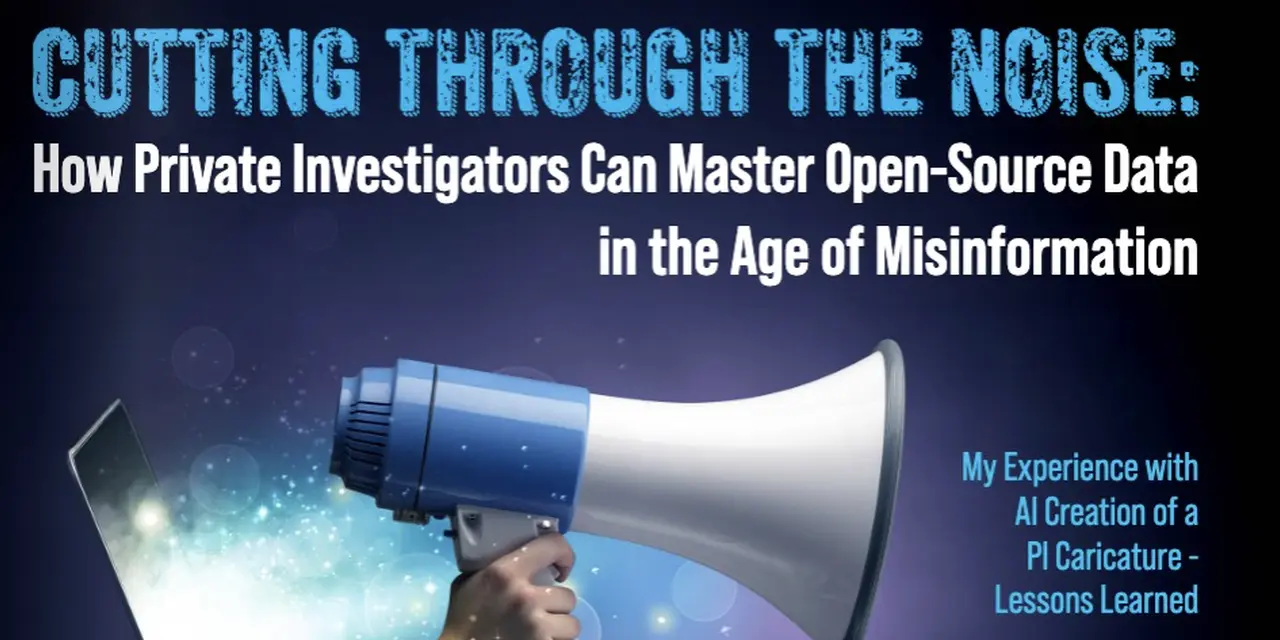
I am pleased to share that my latest analysis, "Cutting Through the Noise: How Private Investigators Can Master Open-Source Data in the Age of Misinformation," has been featured in the current issue of PI Magazine.
The investigative profession has undergone a radical shift. We have moved from an era of "shoe leather" and paper trails to an age of data abundance. However, as I discuss in the article, this abundance has created a new, more dangerous challenge: the struggle for veracity.
In the article, I explore how the sheer volume of Open-Source Intelligence (OSINT) often creates "confidence pollution"—where false information is repeated so frequently across the web that it gains an unearned veneer of truth. For the modern investigator, the goal is no longer just to find data, but to survive the "volume, veracity, and false positives" that define the digital landscape.
I outline a structured methodology for navigating this complex environment, focusing on three pillars:
"Technology should augment investigative judgement, never replace it. The algorithm does not understand context, nuance, or the possibility that the data it has been trained on contains errors."
In a market where there is constant pressure to deliver rapid results, the greatest competitive advantage an investigator can have is methodological rigour. Whether you are a law firm preparing for litigation or a corporate entity conducting cross-border due diligence, the value of the investigation lies in its accuracy. My mission—both at Conflict International and through my work with the ABI and WAD—is to ensure our profession maintains the highest standards of evidence, even as the digital world grows more deceptive.
I invite you to read the full feature in PI Magazine or connect with me here to discuss how we apply these rigorous standards to your global investigative needs.